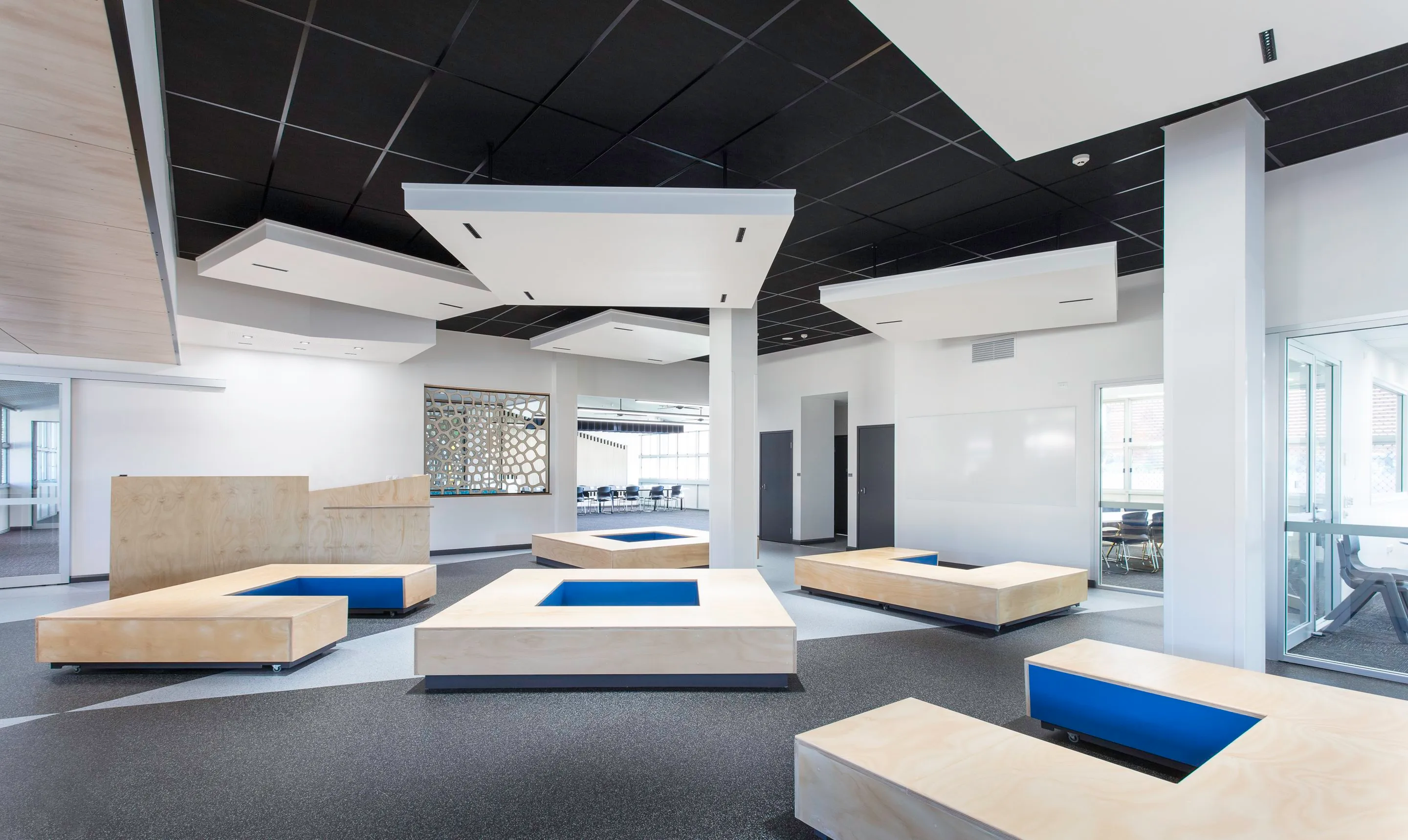

Rubber sheet flooring
Sheet or roll flooring provides a more continuous finish across larger areas and can reduce the number of joins in the floor.
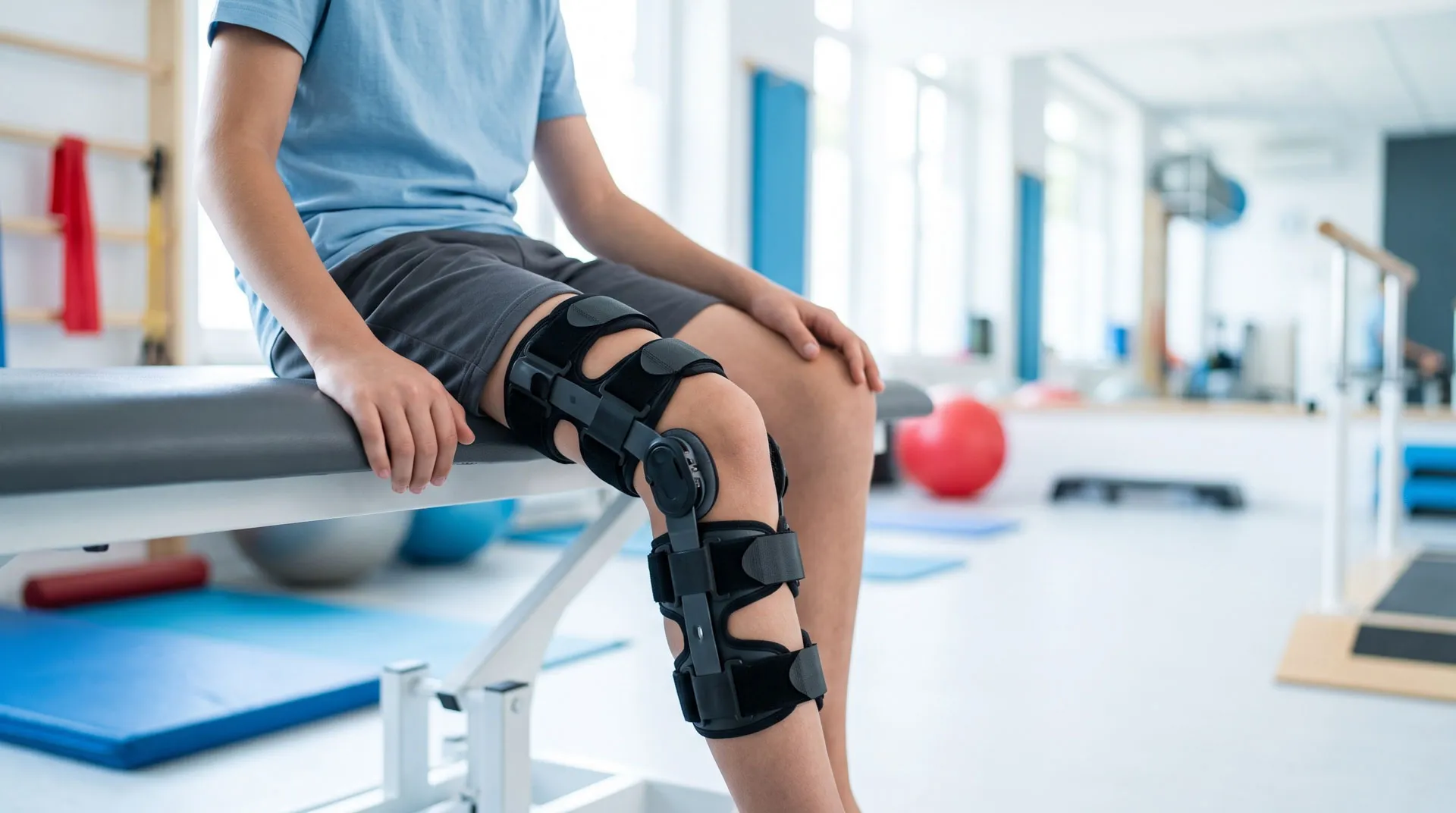
- Healthcare facilities
- Education buildings
- Public spaces
- Corridors
- High-traffic environments
Delivered by: Magnes Projects. Photography: Andrew Carter. Flooring installation: COMFLOOR

Commercial rubber flooring is well suited to spaces where durability, acoustic performance, impact resistance, and comfort underfoot are important.
Commercial rubber flooring is available in sheet, tile, and mat formats, and can be specified for healthcare, education, gyms, public facilities, hospitality, and other demanding commercial environments.
We can help compare products based on traffic, loading, cleaning requirements, acoustics, slip resistance, design, and project budget.
Different rubber flooring formats suit different spaces and installation requirements.
Sheet or roll flooring provides a more continuous finish across larger areas and can reduce the number of joins in the floor.
A modular option that works well in irregular spaces or where different colours, patterns or layouts are required. Individual sections can be easier to replace.
Heavy-duty mats for areas where additional impact resistance or cushioning is required.
01A resilient, comfortable surface where traffic, cleaning, and acoustics all matter.
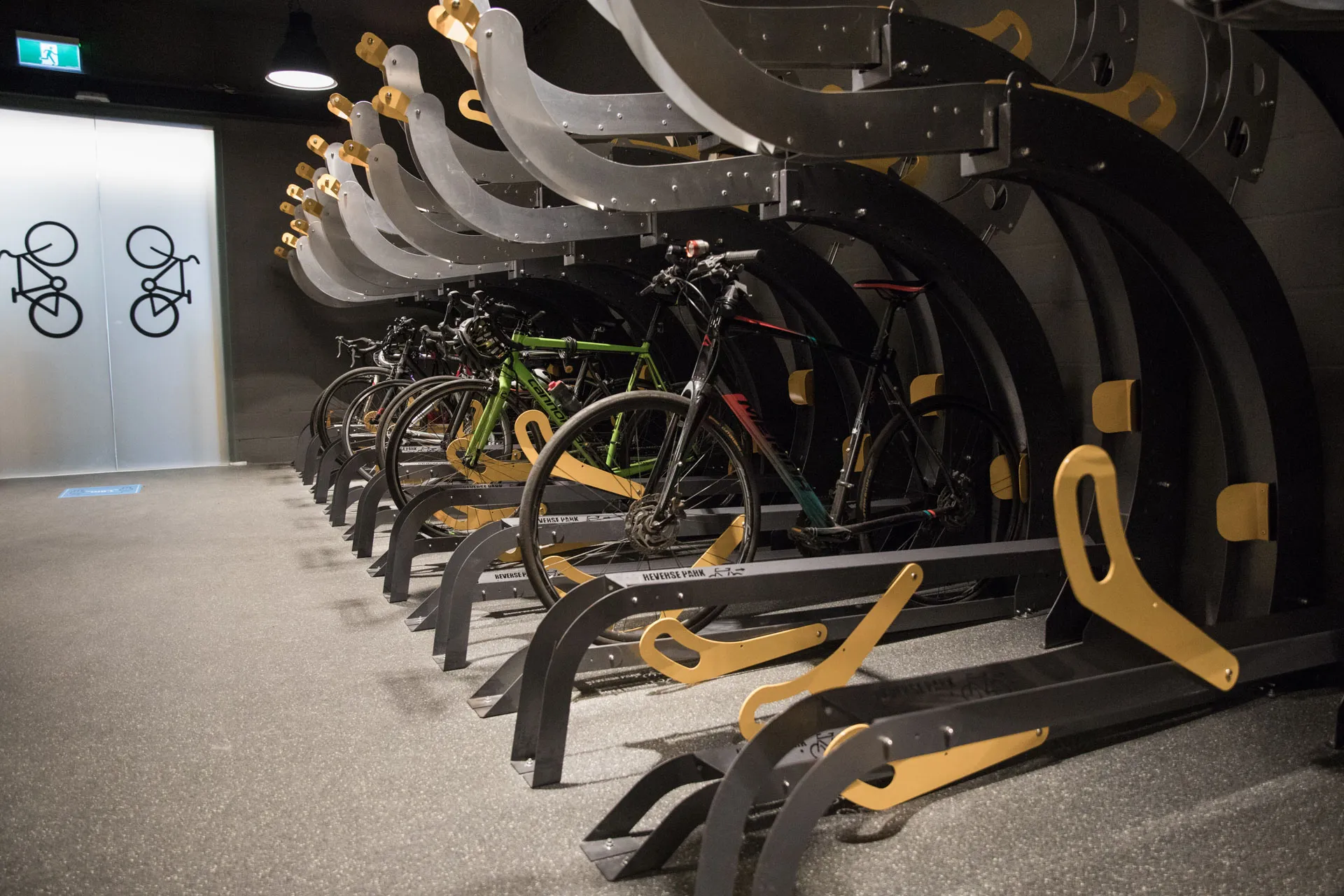
02Corridors, stairs, and shared areas exposed to regular daily use.
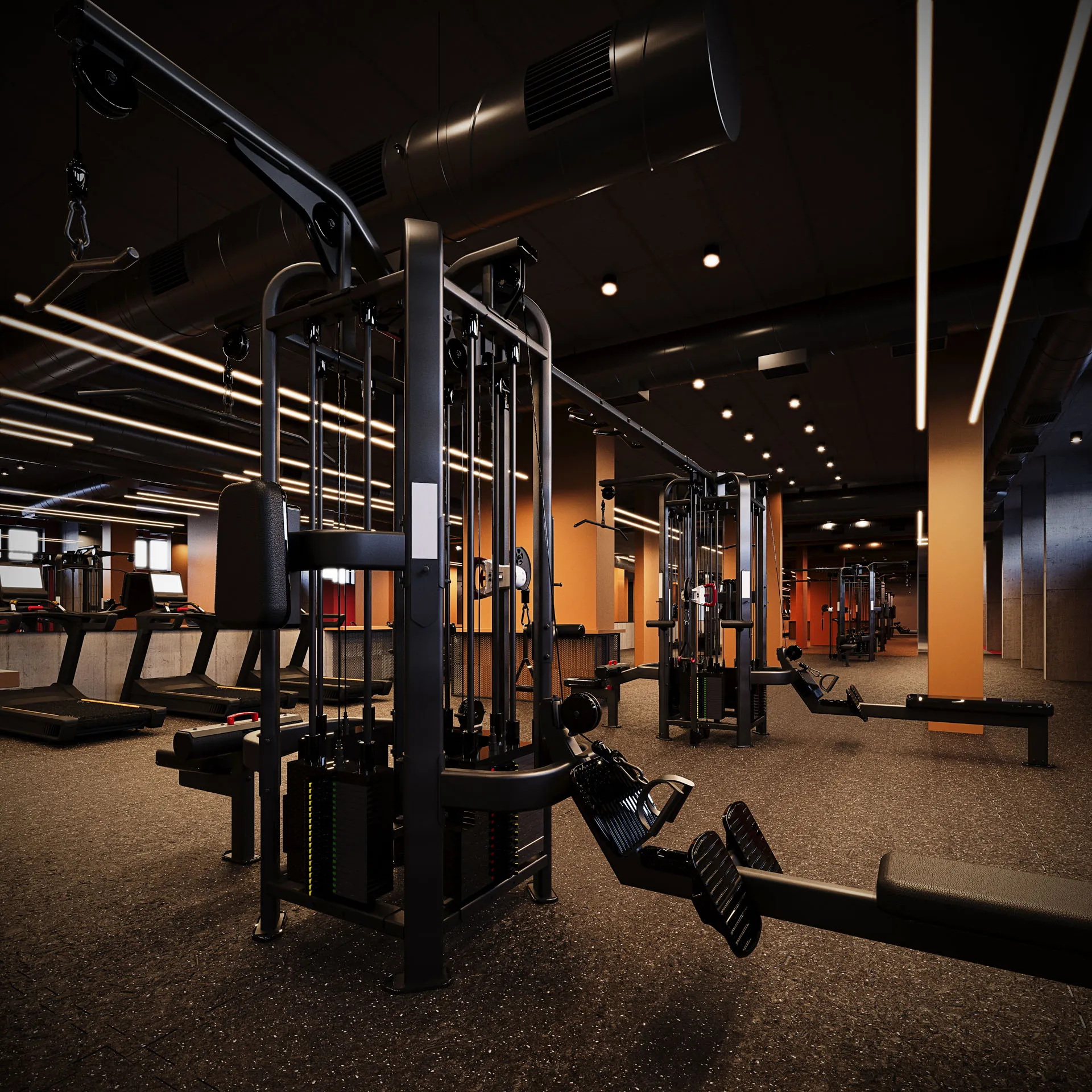
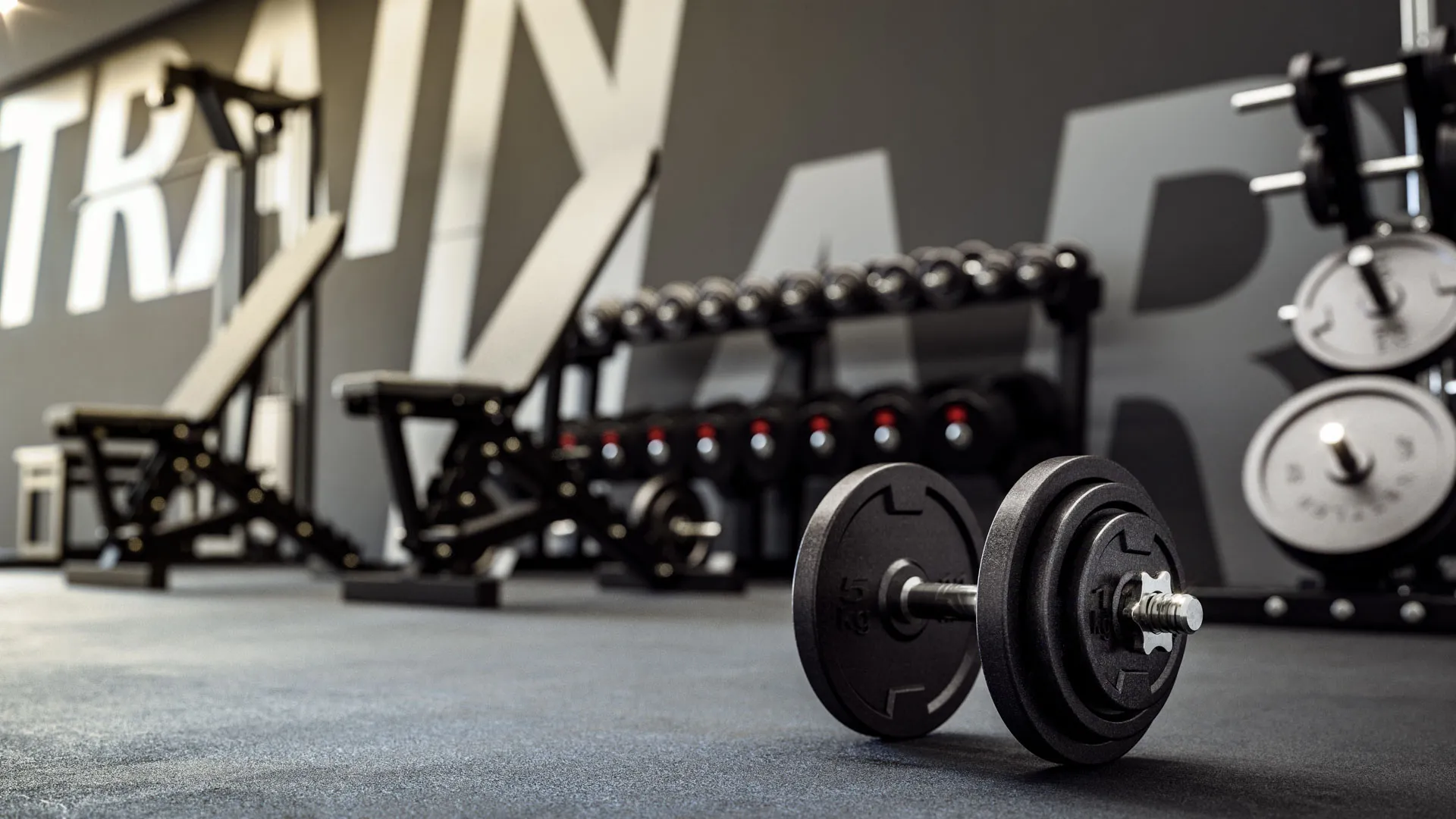
03Weight rooms and exercise spaces needing impact resistance and sound reduction.
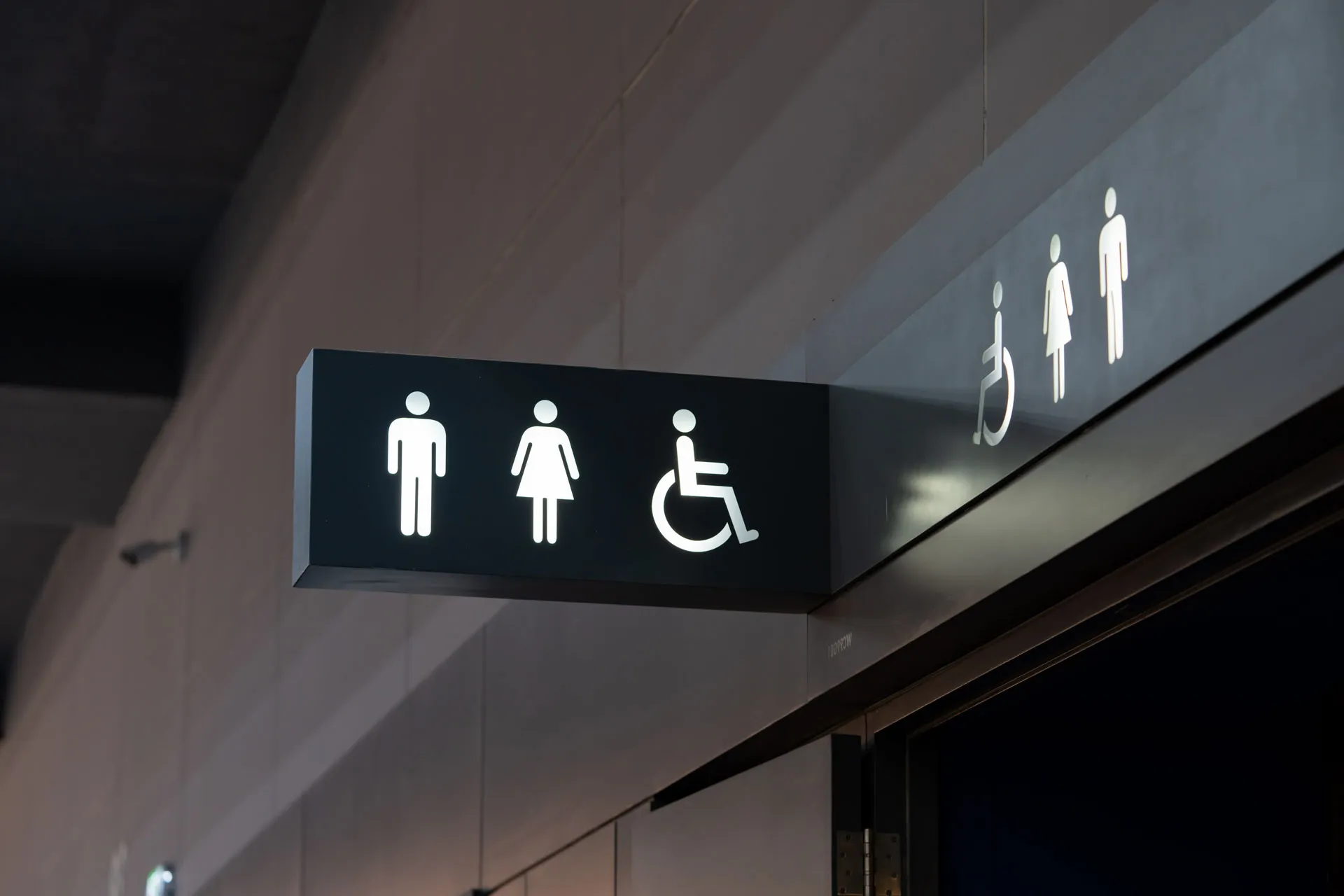
04Moisture-prone public spaces needing slip resistance, durability, and noise reduction.
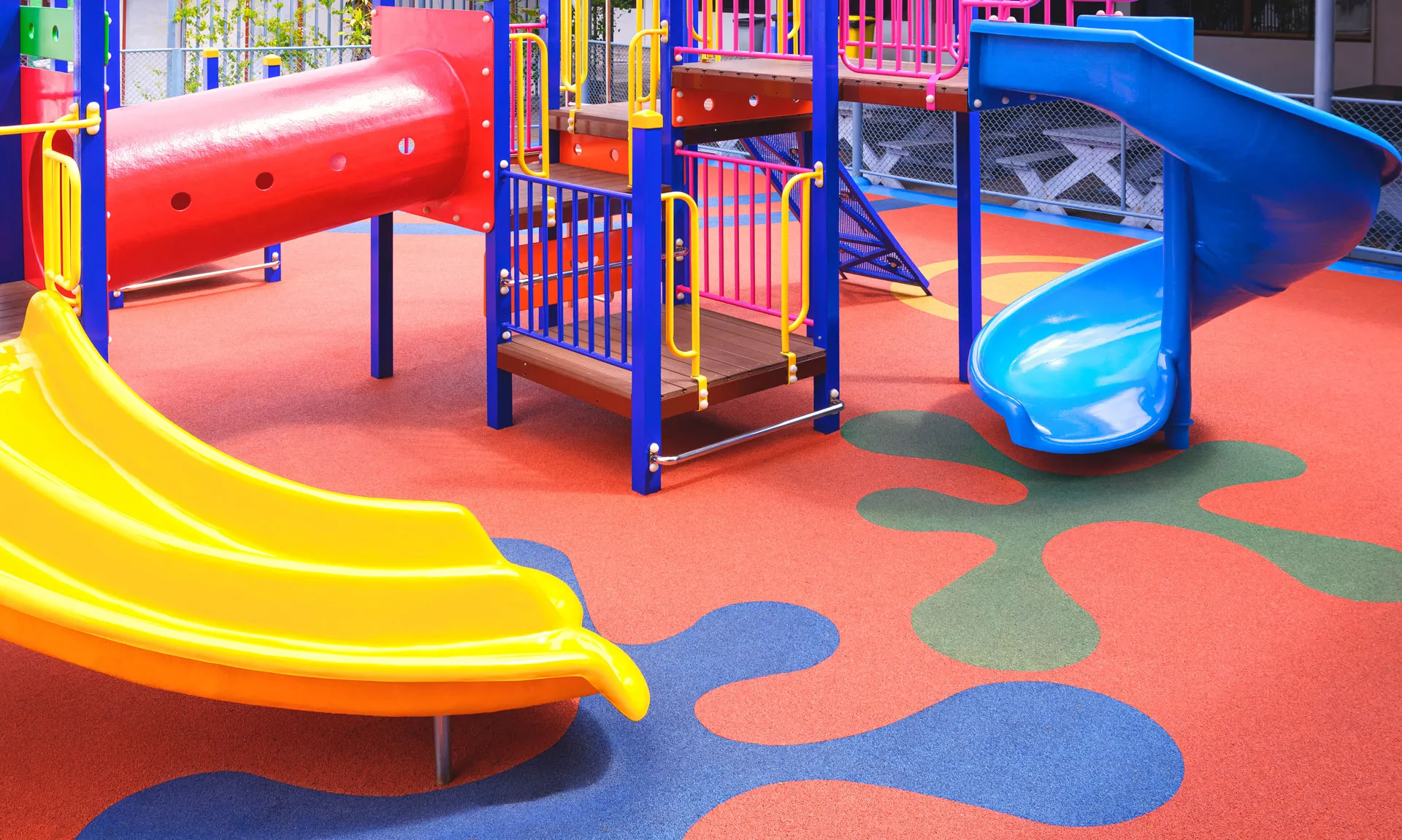
05Durable, slip-resistant, and impact-absorbing surface suited to the demands of busy childcare environments.
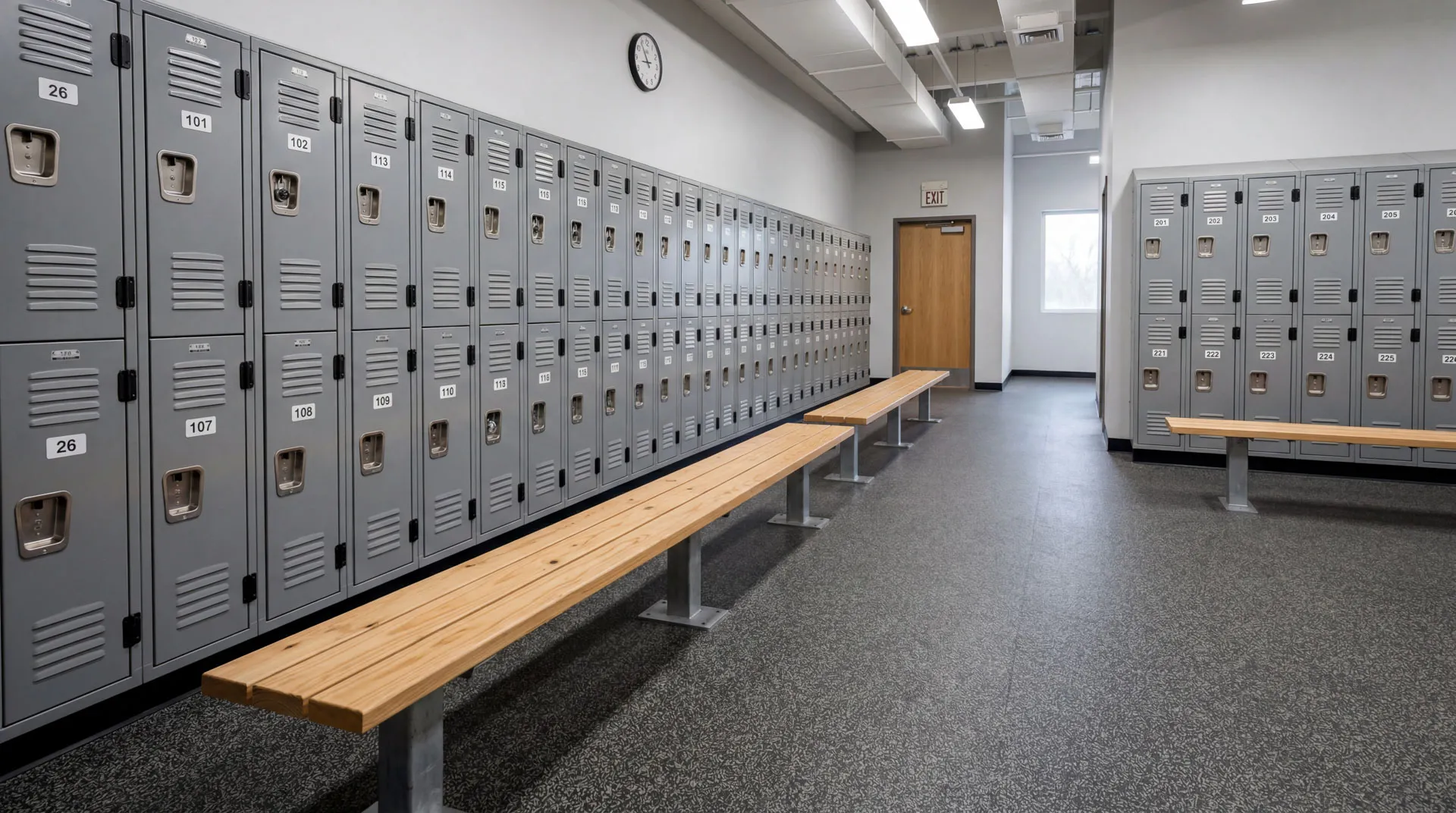
06Change rooms and amenities where resilience and slip resistance count.

Products suited to different levels of foot traffic and loading.
Resilient composition helps reduce impact sound and general noise.
More cushioning than hard surfaces where people stand all day.
Absorbs impact from traffic and equipment, by thickness and density.
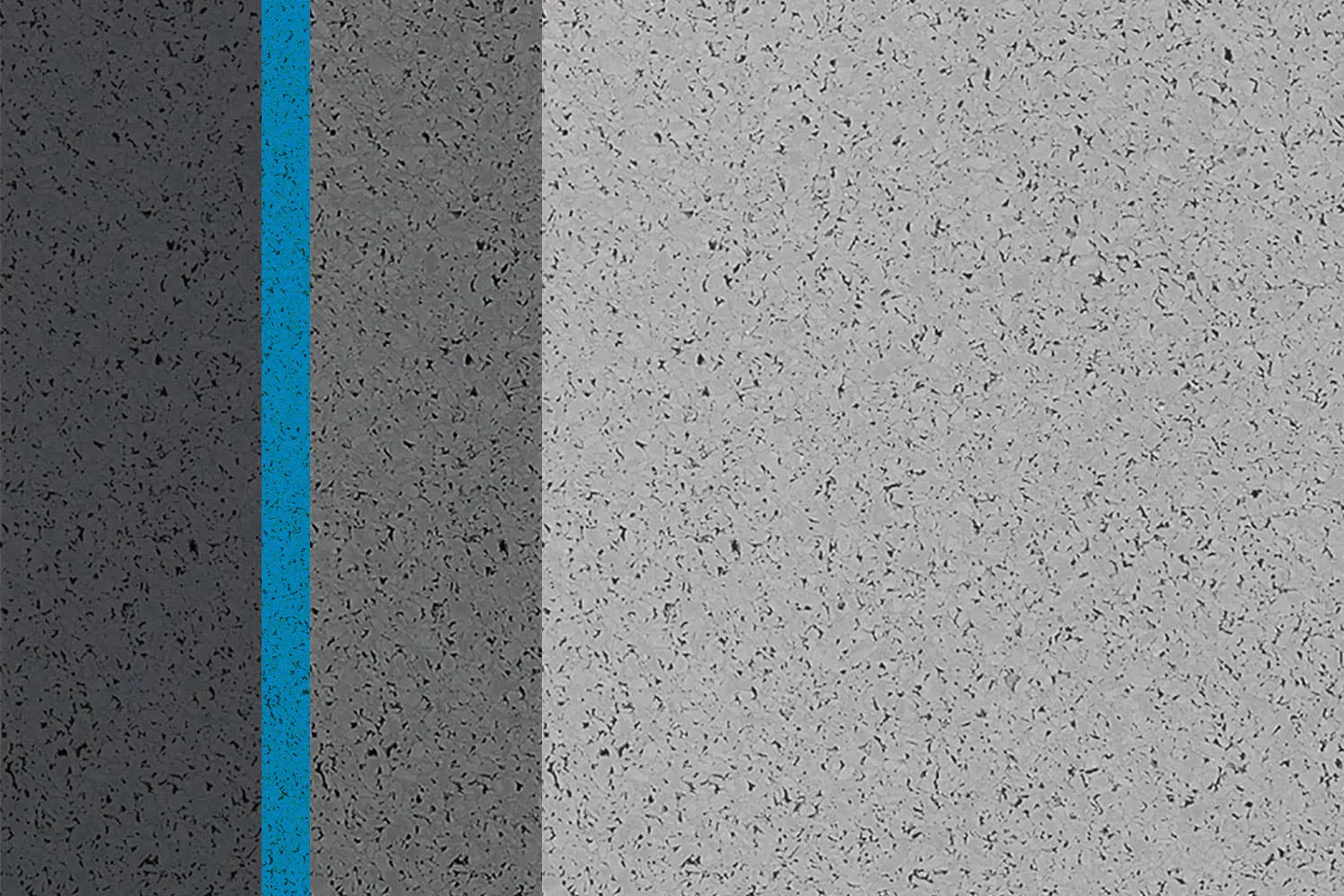
A range of colours, textures, patterns, and formats.

Busy public areas, corridors, and facilities need products built for sustained commercial use.
Gyms and equipment areas exposed to heavier loads may need a different thickness or density.
Type and thickness influence how effectively impact noise is reduced.
Areas exposed to moisture may require specific slip-resistance characteristics.
The substrate must be assessed and prepared, and cost, lead times and program weighed.

Rubber flooring is available in natural, synthetic, and recycled material options, with the environmental characteristics varying between manufacturers and product ranges.
For projects with specific sustainability requirements, we can help compare available products and review manufacturer information around material composition, recycled content and relevant environmental credentials.
This is particularly useful for architects, designers, and project teams working to specific sustainability or material-selection requirements.
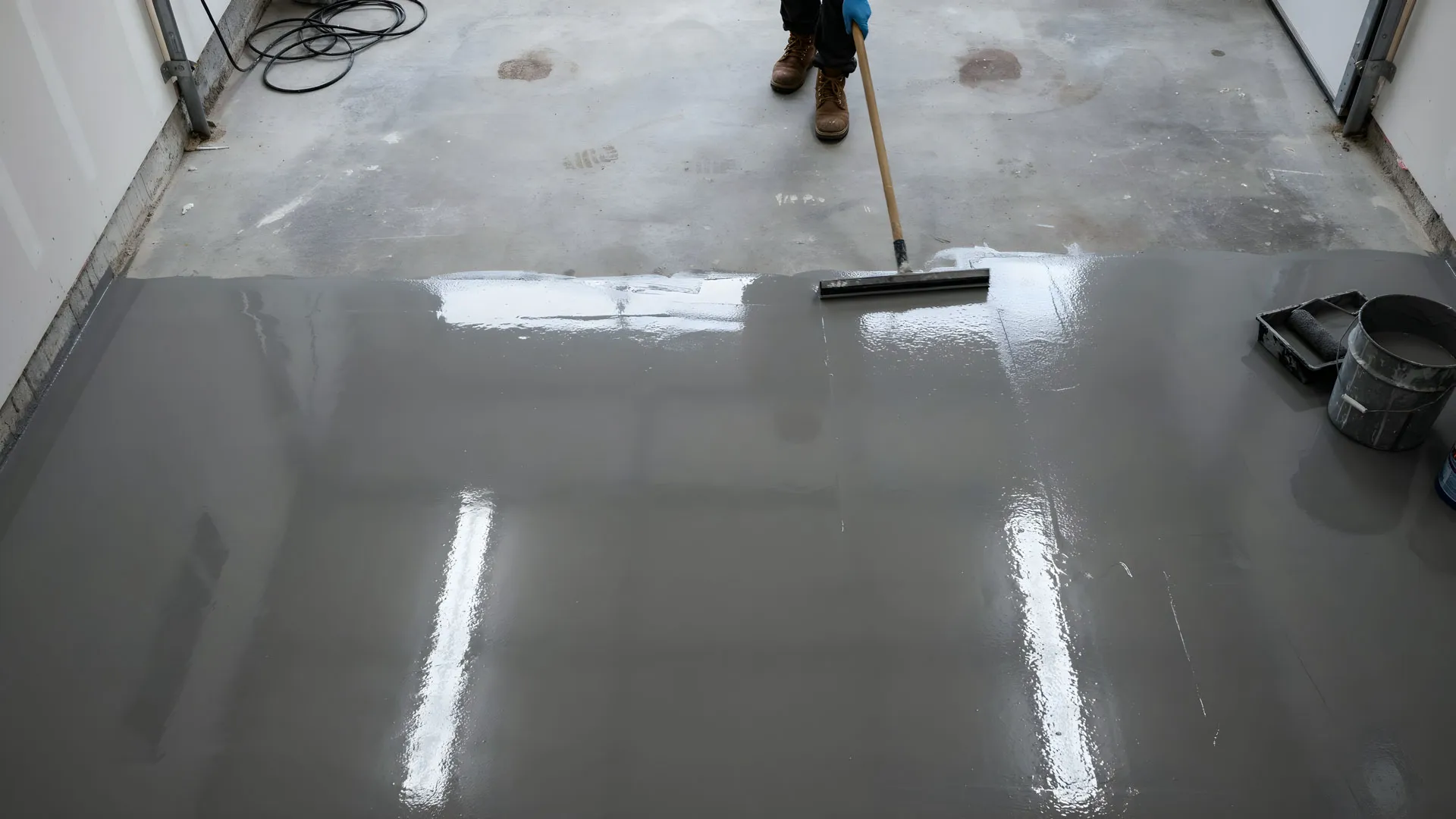
As with any resilient flooring system, the condition of the subfloor can have a significant impact on the finished installation.
Where required, COMFLOOR can include removal, preparation and installation within the project scope.
Depending on the site, this may include:

We work with a broad range of commercial flooring manufacturers and distributors, giving us flexibility when comparing products for different environments, specifications, design requirements and budgets.


Regupol Everroll Ultimate
COMFLOOR has supplied and installed commercial flooring across Brisbane and South East Queensland since 1978. Our team can assist from product selection and site assessment through to preparation, scheduling, installation and final inspection.
We help compare rubber flooring based on the actual requirements of the space, including traffic, impact, acoustics, maintenance, and budget.
Removal, preparation, and installation requirements can be identified before work begins and included within the quote.
Installation can be coordinated around project requirements, with installation scheduled to minimise disruption.
We work across healthcare, education, hospitality, fitness, and other high-use commercial environments.
Where a project requires multiple flooring types, we can also supply and install commercial carpet, vinyl, and epoxy flooring.
Commercial rubber flooring is a resilient flooring material available in natural, synthetic, and recycled rubber products. It is commonly selected for spaces where durability, impact resistance, acoustics, and comfort underfoot are important.
The lifespan depends on the product, level of traffic, environment, installation, and ongoing maintenance. Choosing the correct specification for the space is important to achieving good long-term performance.
Commercial rubber flooring is commonly available in sheet or roll form, modular tiles, and heavy-duty mats. The best format depends on the size, shape, and use of the area.
Rubber flooring is often used in gyms, schools, universities, healthcare facilities, public buildings, airports, shopping centres, amenities, and other high-use commercial environments.
Sheet flooring can suit larger areas where a more continuous finish is preferred. Tiles provide greater flexibility for irregular layouts, modular installation, and design variation. We can help determine which option suits the project.
Yes. Rubber flooring is commonly used in gyms and fitness facilities because suitable products can provide impact resistance, cushioning, and acoustic benefits. The appropriate thickness and density will depend on how the area is used.
Some rubber flooring products may be suitable for moisture-prone areas, but the specific product needs to be selected according to the environment, slip-resistance requirements and manufacturer recommendations.
Yes. Existing floor removal, subfloor preparation and disposal can be included within the project scope.
We typically require the project address, floor plans or measurements, rubber flooring specifications (if known), project scope, substrate details and installation requirements. Site photos can also help us identify any floor preparation, removal or other works that may need to be included.